
If your business owns a vehicle; a delivery van, a work ute, a company sedan, or an SUV beware. The Australian Taxation Office (“ATO”) is currently running a targeted compliance campaign on not only cars, but work utes in particular!
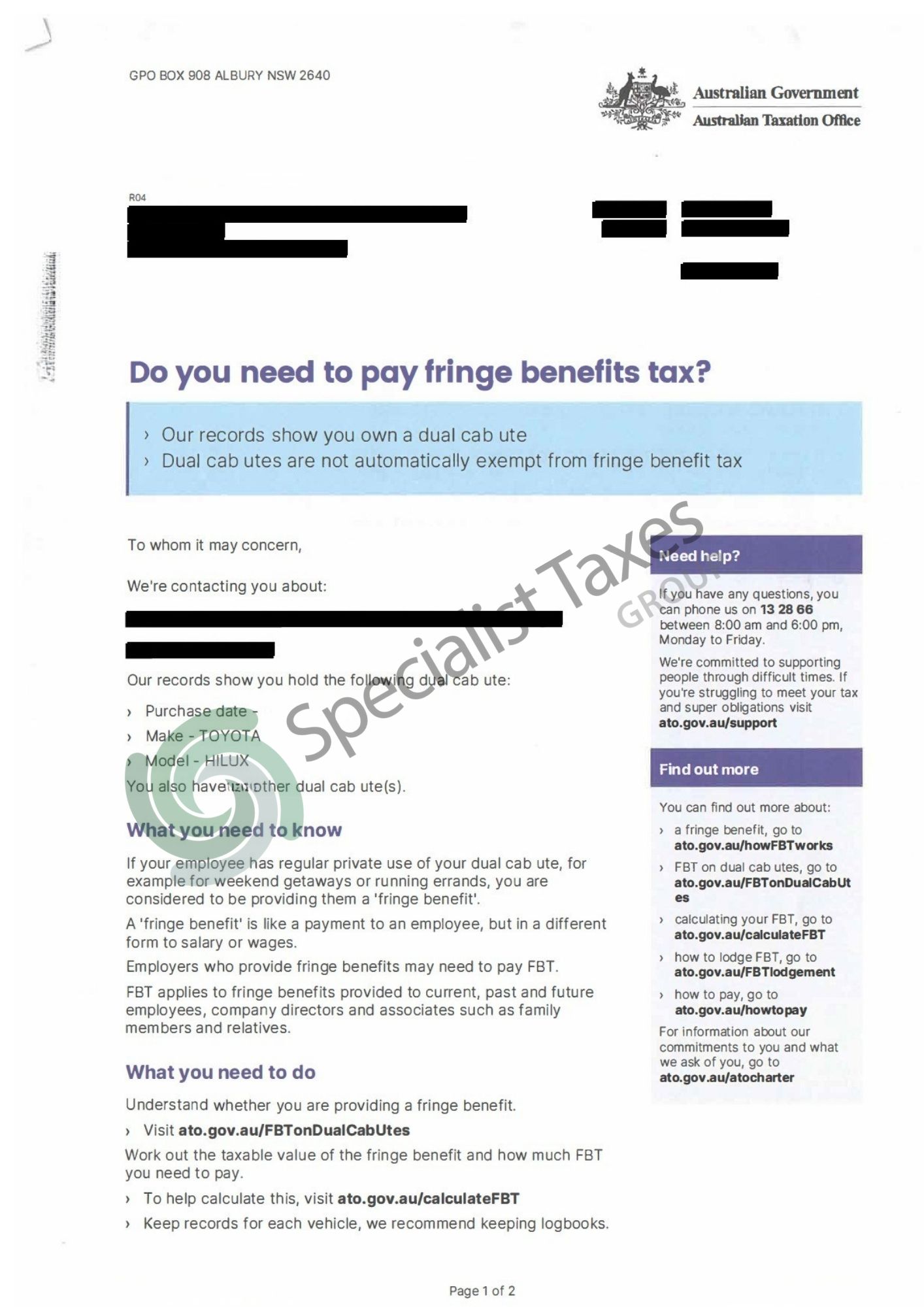
Thousands of taxpayers have already received letters with the ATO advising that more are to come thanks to its data-matching activity with the Roads Authorities.
It’s not just sedans that they are focusing on, the ATO also has an active compliance project specifically targeting utes!
The focus on cars and utes
The ATO are identifying businesses that have large fleets of vehicles but who have disclosed minimal amounts of FBT on cars in their FBT returns.
The audit letters ask taxpayers to reconsider their FBT compliance before they begin an audit.
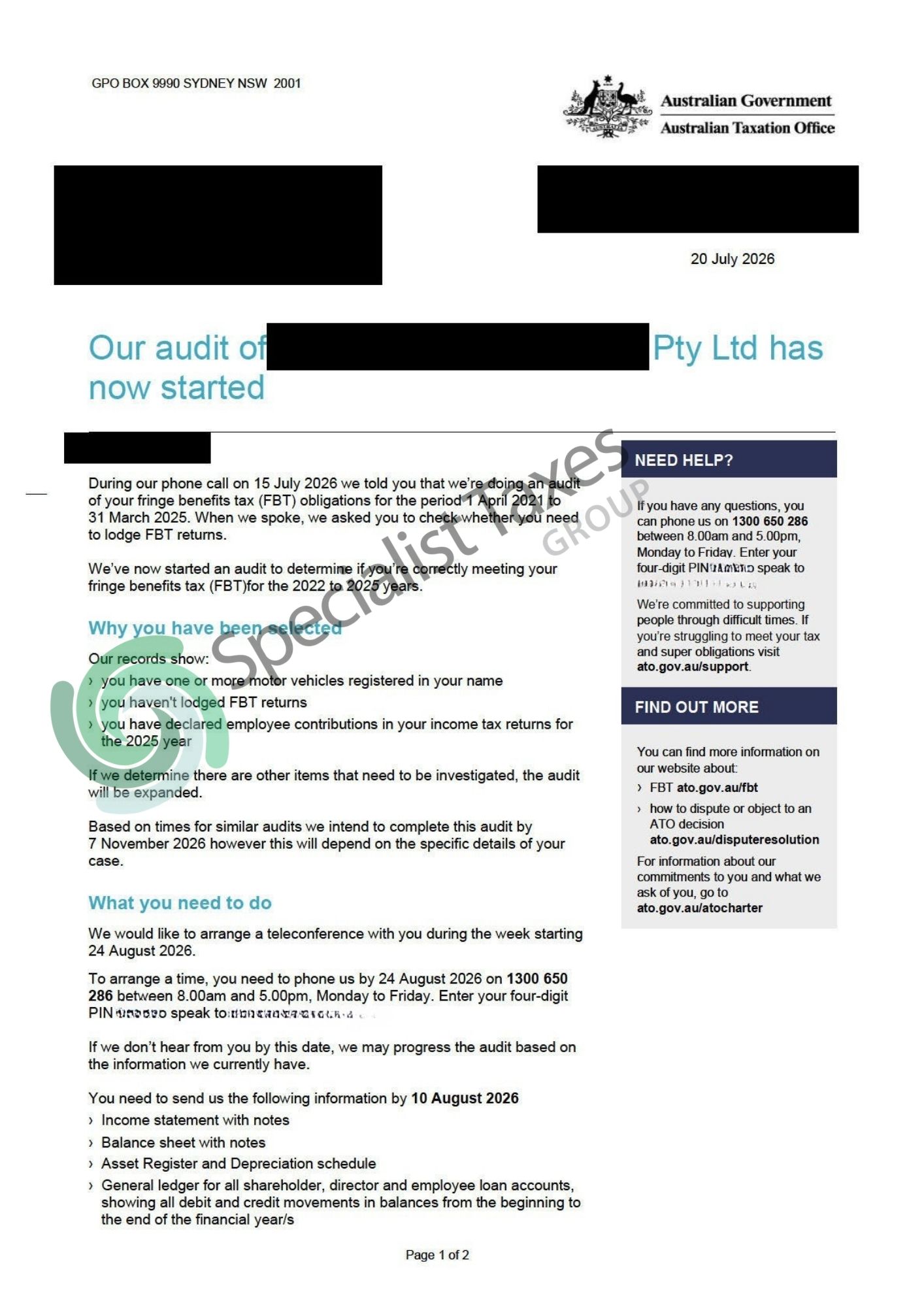
These letters carry a project reference number, which tells us this is part of a broader compliance campaign rather than a one-off audit of a single business. That’s actually useful to know because it means the ATO is working from data matching across a large number of businesses and it’s proactively flagging vehicles and businesses it believes are at high risk of non-compliance
The letters ask business owners to review their position, work out if FBT is payable and lodge an amendment by a set date. If it is ignored, the risk doesn’t go away, it escalates to a formal review/ audit once the time to respond elapses.
“Aren’t work utes exempt?”
This is a common misunderstanding we see and the ATO’s letter makes this point directly: dual cab utes are not automatically exempt from FBT. There’s a two-part test and both parts have to be satisfied AND you will need to provide evidence that you have met the ATO’s requirements at the time of lodgement of each of your prior year FBT returns.
1. Is it an “eligible vehicle”? The vehicle needs to be designed to carry a load of one tonne or more, more than eight passengers, or a load under one tonne but not primarily designed for carrying passengers. Most dual cab utes meet one of these tests, but it needs to actually be checked against the vehicle’s compliance plate, not assumed.
2. Is private use genuinely limited? Even if the vehicle passes test one, the exemption only holds if any private use is minor, infrequent and irregular; think an occasional trip to the tip, not weekend trips to the coast or towing the boat on Sundays. Travel between home and work is generally fine. Regular personal errands, family use, or a vehicle that’s simply available for the employee to use as they please, is not.
If you cannot evidence that private use is limited and that annual checks have been performed to verify this, FBT applies and in full, calculated under the Statutory Formula method (or as a residual benefit for vehicles with a carrying capacity of 1 tonne or more).
Not only utes!
The ATO’s FBT compliance campaign is not only aimed at dual cab utes, it is any vehicle that is made available to an employee for private use; a sedan, SUV, a “company car” sits squarely within the ordinary car fringe benefit rules.
There’s no equivalent exemption test like there is for a dual cab – if a SUV/sedan is available for private use, FBT applies, calculated under the statutory formula or operating cost method (but for this method you would have needed to have a valid logbook in place at the time of lodgement).
What we recommend
- Check eligibility properly; don’t assume a ute is exempt
- Implement a limited private use policy
- Look honestly at private use and implement annual checks
- Shore up your evidence; annual odometer declarations & tests
- Act before the ATO acts for you; lodge annual returns and voluntarily disclose any compliance issues identified
This article is general information only and doesn’t take into account your specific circumstances. If you’d like a confidential review of your vehicle fleet and FBT exposure simply book a time for a call with us.